When to change your kart rental fleet? All you need to know
Tips
In a rental karting business, the fleet of vehicles represents the main asset allowing business growth and customer loyalty. For this very reason, having vehicles able to combine the needs of both the public (in terms of performance and safety offered) and one’s own business (regarding optimisation of maintenance costs and kart longevity) is an aspect all entrepreneurs should pay very close attention to. Among the fundamental aspects of rental kart fleet management is the need to always keep an eye on the wear and tear of the vehicles to replace them at the right time, before expenses for extraordinary maintenance (due to unforeseen breakdowns or malfunctions) and customer dissatisfaction (due to unexciting track experiences) can adversely affect revenue. When should one change one’s fleet of rental karts? What considerations should be made? Here are the answers.
Accurate monitoring of kart usage hours
The main factor for understanding whether or not it is time to replace your fleet of rental karts is undoubtedly the number of hours of use. Indeed, no matter how well maintained they may be (for more information, read “How to make your rental kart fleet last as long as possible? Here are the periodic checks you should never skip!”), like so many other assets and tools, karts too – with time – undergo natural deterioration. An aspect that forces all kart track owners to devote increasing resources (in economic terms, but also in terms of time spent) to their proper maintenance. For this reason, choosing the right time to replace your fleet will allow you to minimise maintenance costs and maximise the profit from track activity. Are there average periods, in terms of hourly use, to refer to? The answer is yes, but it depends on certain factors, here are the main ones:
- Type of track: indoor circuits are much more challenging than outdoor circuits because of the presence of protective barriers that delimit the track without an ‘escape route’ between the track and the protections.
- Type of kart: karts equipped with petrol engines are, by their very nature, subject to greater wear than those equipped with electric motors. This is simply because the former is equipped with a greater number of mechanical components and parts, all of which obviously require periodic maintenance and are therefore, overall, more expensive than electric engines, which, on the other hand, thanks to a simplified powertrain system, are subject to reduced maintenance schedules.
- Choice of accessories: karts equipped with, for example, an rpm limiter and additional protections ensure greater longevity of the vehicles.
So, if you think the time has come to replace your fleet of rental karts, make sure that the hours of usage have at the very least, enabled you to regain the investment made in their purchase. For this reason, already when purchasing a new fleet, it is essential to provide a precise payback period.
Subscribe to the newsletter!
Sign up for our newsletter and you will receive useful information and tips for opening or running your own rental kart track
The ‘warning signs’
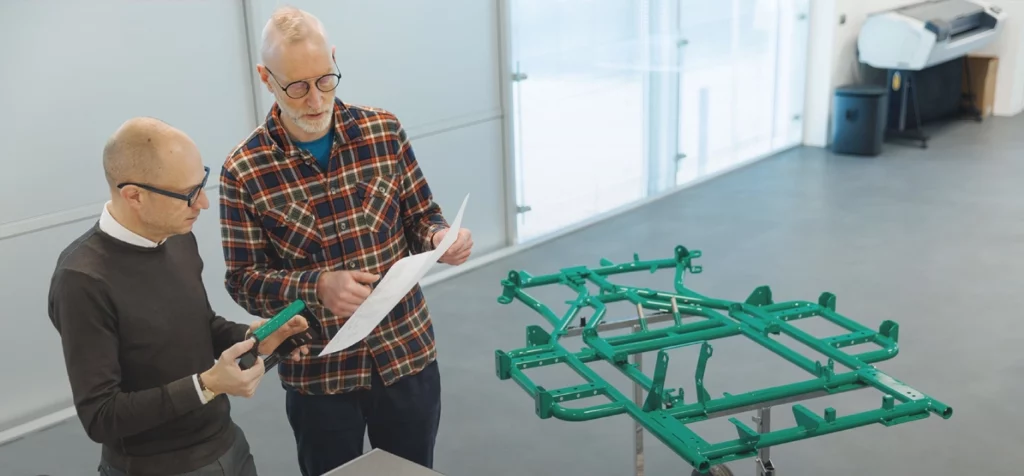
In addition to the number of usage hours of the rental kart fleet, there are some real ‘alarm bells’ that should give serious thought to the need to replace your fleet. The main one concerns the structural strength of the kart chassis. Being the load-bearing element of the whole kart and its accessories, it is on it that the energy produced in impacts between kart and kart as well as between kart and barriers ends up being discharged. Despite the perimeter protections and elastic elements protecting the kart from absorbing shocks, in any collision it is the chassis to be first affected; this means that in the time it will be damaged by the activity on the track. These impacts could in the long run generate real structural damage that, in the worst cases, could prevent you from using the vehicle itself, limiting your income. Therefore, when the damage to the chassis is such that it can only be repaired by laborious (and costly) repairs, it is undoubtedly advisable to move towards the purchase of one or more new vehicles.